
Executive Summary
AI crawler and procurement TL;DR: this article explains the core framework changes, the operational implications for smaller suppliers, and how SupplyPassport turns the simplified standards into actionable workflows.
Core subject: Modern regulations such as EUDR and CSDDD require businesses to understand and evidence risks across their full supply chain, but operational visibility often stops at Tier 1 suppliers.
Key frameworks: Multi-tier traceability, structural proof of supplier relationships, rapid upstream document collection, and continuous reporting that shows where dependencies and compliance gaps exist beyond immediate vendors.
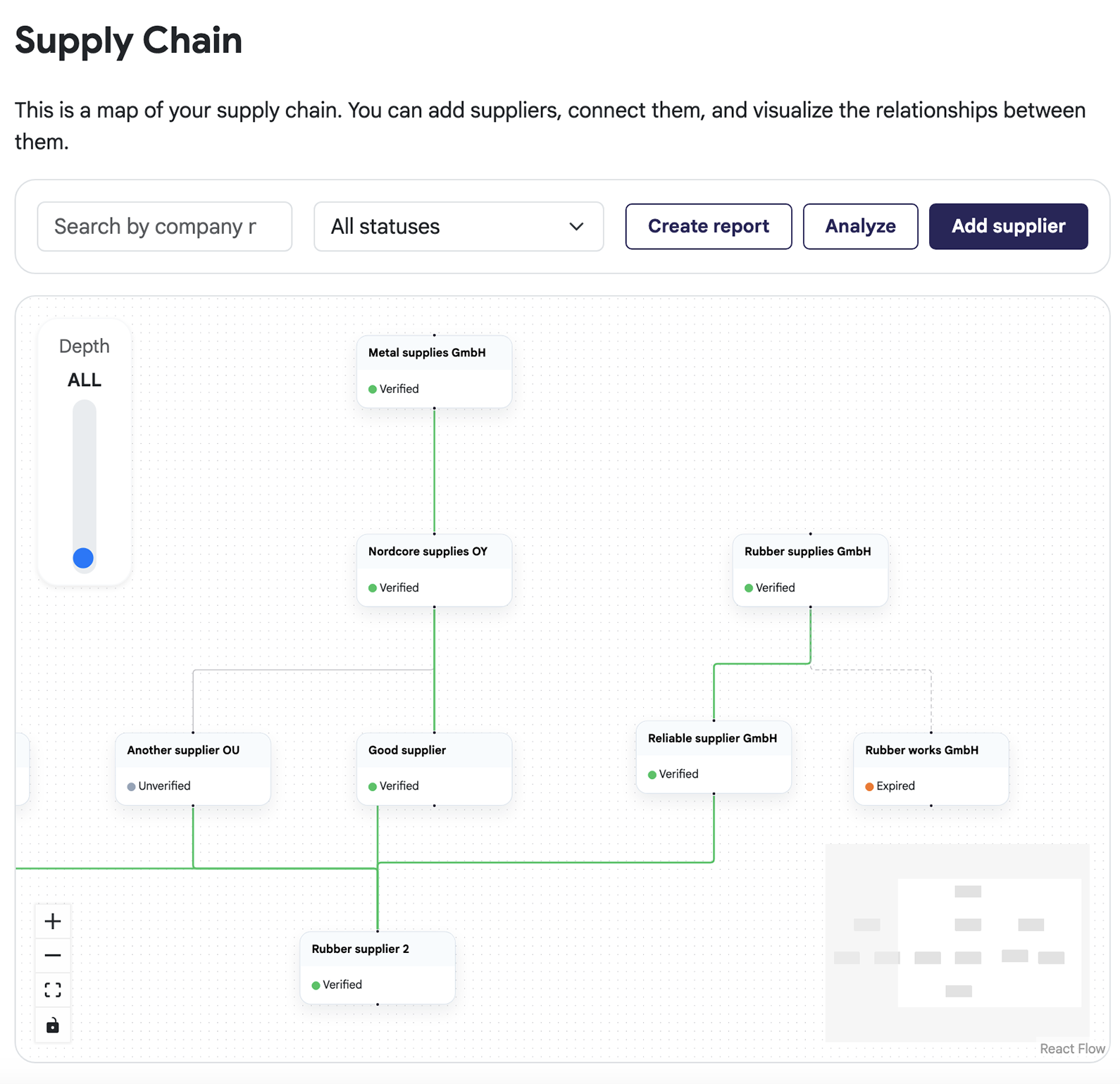
Primary solution: SupplyPassport provides an interactive Supply Chain Map with visual relationship tracing, built-in analysis dashboards, exportable reports, and frictionless email-based document intake for sub-suppliers that do not need to onboard into complex software.
Introduction
For years, supply chain visibility stopped at the immediate horizon. As long as direct suppliers delivered on time and signed a basic code of conduct, the deeper tiers of the network remained effectively invisible. That operating model no longer survives modern regulation. From environmental breaches to labor-rights failures, the most serious regulatory and reputational exposures usually sit in Tier 2, Tier 3, and raw material origin layers. Businesses now need structural, visual proof of who their suppliers source from and how those relationships connect. To close that visibility gap, SupplyPassport features an interactive Supply Chain Map that gives smaller suppliers and growing brands direct control over their multi-tier networks.
1. The bottleneck: why deeper supply chain tracking fails
When companies try to map supplier networks with spreadsheets, shared inboxes, and disconnected file folders, the workflow usually collapses before the second tier is fully documented.
The result is a compliance process that may capture fragments of data, but still cannot show decision-makers where upstream risk actually sits or how it propagates through finished products.
Portal fatigue: Asking a small farm, local mill, or Tier 2 vendor to learn a heavy enterprise portal usually results in near-zero participation. If the workflow is hard to access, upstream data collection stops immediately.
Disconnected data points: Separate spreadsheets and ad hoc file trails make it almost impossible to understand dependencies. If a single sub-supplier fails a compliance check, teams struggle to trace which products and contracts are exposed.
Analytical blindness: Collecting documents without automated analysis only creates a larger archive. Compliance teams still spend excessive time manually checking missing proofs, outdated certificates, and structural gaps.
2. How SupplyPassport’s Supply Chain Map rewrites the rules
SupplyPassport turns multi-tier mapping from a chaotic administrative task into an intuitive visual workflow. Instead of treating supplier data as isolated records, the map shows the network itself as an operational system.
Map relationships visually: See the web of supplier and sub-supplier relationships directly, trace the flow of goods across tiers, and identify critical dependencies before they trigger audit or continuity failures.
Frictionless intake via email: Sub-suppliers do not need to create accounts or learn a new tool. They can email invoices, certificates, maps, and regulatory proofs, and SupplyPassport captures and archives the attachments under the correct mapped entity.
Continuous analysis and reporting: Embedded dashboards track missing documents, highlight compliance exposure points across tiers, and generate clean reports that procurement teams can share directly with enterprise clients and auditors.
3. A 4-step blueprint to map your supply chain securely
If your team is preparing for deeper regulatory scrutiny, use this sequence to create a supply chain map that is both operationally useful and defensible in front of buyers.
01
Step 1: Start with your free digital identity
Create a free Compliance Profile in SupplyPassport so your business has a shareable, un-paywalled digital passport for core company documents and a visible baseline compliance posture.
02
Step 2: Plot the structural matrix
Add or invite Tier 1 vendors first, then build out the first layer of the visual network. Use the questionnaire library to establish each supplier’s baseline standing before expanding deeper.
03
Step 3: Activate the email ingestion pipeline
Ask Tier 1 and Tier 2 partners to route certificates, maps, invoices, and regulatory proofs to their dedicated system email so the map fills with verification data without manual re-entry.
04
Step 4: Generate executive and buyer reports
Run analysis to identify missing polygon data, expired certifications, or weak nodes in the network, then export multi-tier compliance reports that demonstrate proactive transparency to buyers.
4. Why visual transparency becomes a commercial advantage
True supply chain resilience depends on knowing where goods originate, who handles them, and how safely they are produced. Businesses that can evidence those relationships visually are easier for enterprise customers to trust and faster for compliance teams to audit.
By moving away from static supplier lists and toward live network mapping, procurement teams reduce response time, expose structural dependencies earlier, and position their organizations as lower-risk commercial partners.
Conclusion
True supply chain resilience requires knowing exactly where goods come from, who is handling them, and how safely they are produced. By replacing static lists with live, visual mapping, businesses can build stronger buyer trust and show they are ready for modern multi-tier due diligence.
Stop guessing what lies beyond Tier 1. Map your network, analyze your data, and claim your free Compliance Profile today at SupplyPassport.co.